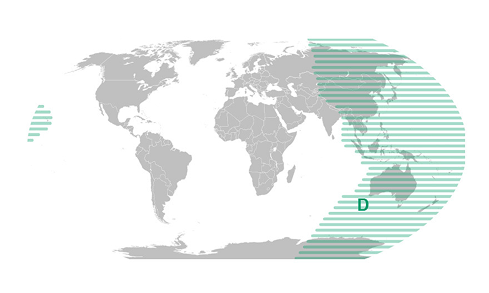
Since 2010, Circle of Security Parenting (COSP) has been implemented in over 20 countries with more than 60,000 facilitators trained around the world. We often reflect on why the Circle resonates with so many diverse cultures, professions, and families. Research from Australia and New Zealand provides insight into what drives this widespread application.
The Research Evidence
Two studies illuminate why Circle of Security resonates so broadly. The first, with 202 professionals who were trained to deliver Circle of Security across Australia and New Zealand, examined how different training durations affected their capacity to respond to challenging parent-child interactions. The second used the "Most Significant Change" technique with eight practitioners from one Australian organization.
Together, these studies reveal how learning Circle of Security not only provides programming for families, but also transforms organizational culture through shared coherence.
A Paradigm Shift
Circle of Security creates a fundamental shift in understanding challenging behaviors not only in the families we serve but also in each of us who learn it. After learning the model, participants used significantly more attachment-focused language and showed greater relational understanding. Behaviors that were confusing now made sense, and responses became clearer. This occurred across all professional backgrounds - nurses, social workers, psychologists, educators, and allied health professionals.
Shared Language Creates Coherence
The qualitative research revealed something profound: shared language transforms workplace culture by creating what we might call "shared coherence" - the ability to think and talk clearly about complex relational dynamics while staying emotionally regulated.
"There's a language shared and an understanding shared," noted one participant. "When you're given the tool and it's integrated into how you understand your work, and it's supported by the people around you... the momentum that's created professionally is huge."
When teams can name experiences using Circle of Security concepts like "Shark Music," "Being With," “Rupture and Repair,” or providing "Hands," they develop greater capacity to reflect on challenging moments rather than simply react. This allows professionals to hold complexity and maintain organized thinking when discussing relationships that matter most.
With share understanding, teams process difficult cases more effectively, supervisors provide more attuned support, and organizations respond to crises from a more integrated stance.
Simple Concepts, Universal Application
What seems most powerful about Circle of Security is its simplicity and personal relevance. COS concepts are consistently described as "simple" and "easy to apply." The visual Circle graphic and core principles like being "Bigger, Stronger, Wiser and Kind" provide frameworks for reflection and meaning making.
Significantly, while professionals learn Circle of Security to facilitate with parents, they typically highlight its personal relevance. The Circle brings coherence not only to clinical work, but to collegial relationships, partnerships, parenting, and family dynamics. This transcendent quality means people can continue deepening understanding by making meaning at multiple levels.
Participants naturally applied COS principles to supervision, leadership, and organizational culture, creating environments where reflection and relationship are prioritized at every level.
Meeting Universal Needs
These findings help explain COS's global reach. The approach addresses fundamental human needs for coherence and connection that transcend cultural boundaries. By providing accessible language for complex relational experiences, Circle of Security enables professionals to develop greater clarity and deeper attunement not only for the families they serve, but also to relationships in their own personal lives that matter most.
In our increasingly complex professional world, this capacity for shared meaning making and reflective practice may be exactly what teams need to provide truly attuned, relationship-based care.
Learn more about Circle of Security concepts at our What is Circle of Security? page or explore Foundation Courses for training opportunities.
Read the research here and here.